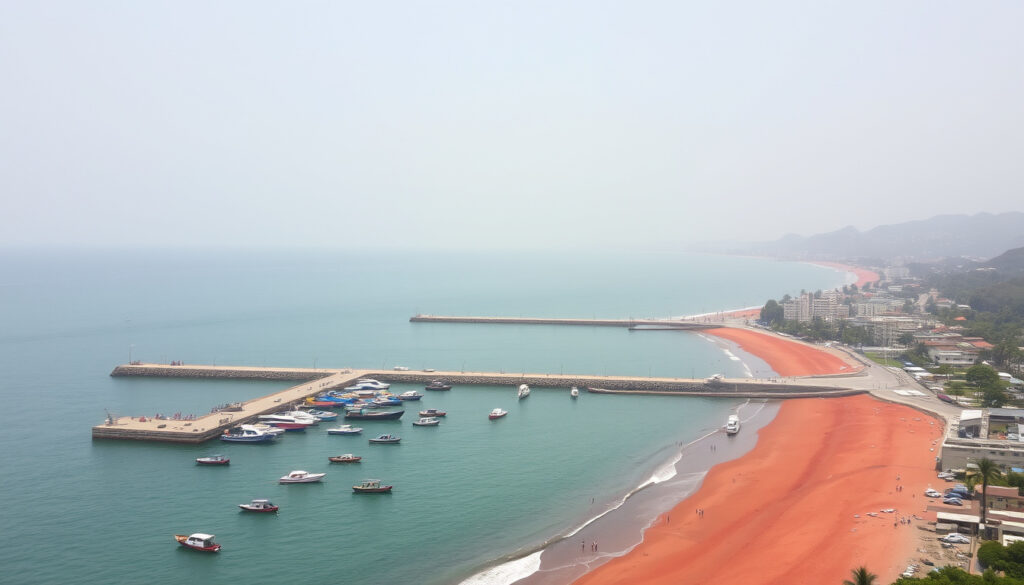
Sierra Leone – Your Complete Country Guide With Key Facts
Sierra Leone: A Comprehensive Country Guide
Sierra Leone, officially the Republic of Sierra Leone, is a country on the West African coast known for its white-sand beaches, tropical rainforests, and a complex history that includes the transatlantic slave trade, colonization, and a brutal civil war. Once a British colony, it gained independence in 1961 and has since worked to rebuild its democratic institutions and economy. This profile covers the country’s geography, culture, history, economy, and essential travel advice.
Where is Sierra Leone Located? Geography and Map Overview
Sierra Leone is situated in West Africa, bordered by the North Atlantic Ocean to the southwest, Guinea to the north and east, and Liberia to the southeast. The capital city is Freetown, located on the Freetown Peninsula, a mountainous region with a natural harbor.
Capital
Freetown
Official Language
English (Krio widely spoken)
Currency
Sierra Leonean Leone (SLE)
Population (2025 est.)
~8.6 million
Key Insights about Sierra Leone
- A West African nation with a complex history shaped by the transatlantic slave trade, colonization, and a devastating civil war (1991-2002).
- A presidential republic with a secular state; English is the official language, though Krio is the lingua franca.
- The economy is heavily reliant on mining (diamonds, rutile) and agriculture, with the Leone as its currency.
- Travelers should consult the latest UK FCDO advice due to evolving safety and health conditions.
Snapshot Facts
| Category | Detail |
|---|---|
| Capital | Freetown |
| Official Language | English |
| National Language | Krio (lingua franca) |
| Population (2025 est.) | ~8.6 million |
| Currency | Sierra Leonean Leone (SLE) |
| Government | Presidential Republic |
| Independence | 27 April 1961 (from the UK) |
| Major Religions | Islam (~78%), Christianity (~21%) |
| Calling Code | +232 |
| Drives on the | Right |
What Language and Religion Define Sierra Leone?
Languages of Sierra Leone
English is the official language, though its regular use is largely limited to the literate minority. Krio, an English-based Creole, is the most widely spoken lingua franca, understood by approximately 95% of the population. The principal vernaculars are Mende, spoken predominantly in the south, and Temne, spoken in the north.
Religion and Ethnic Groups
Sierra Leone is a religiously diverse nation where Islam (predominantly Sunni), Christianity, and traditional beliefs coexist peacefully. The country is home to approximately 18 ethnic groups, with the Temne in the north and the Mende in the south being the largest. The Limba and Kono are other significant groups.
Sierra Leone’s cultural fabric is multilingual and religiously diverse, with Islam (~78%) and Christianity (~21%) as the predominant faiths, alongside traditional beliefs.
What is the History of Sierra Leone? From Colonization to Independence
Colonial Era and Independence
Freetown was founded in 1787 as a settlement for freed slaves from the British Empire and the Americas. It became a British Crown Colony in 1808, and a British Protectorate over the interior was established in 1896. Sierra Leone achieved independence from the United Kingdom on 27 April 1961 and became a republic in 1971. The establishment of a one-party state in 1978 led to increasing instability.
The Civil War (1991-2002)
The Sierra Leone Civil War began in 1991 when the Revolutionary United Front (RUF) attacked from Liberia. This 11-year conflict was marked by horrific atrocities, including the widespread use of child soldiers and the trade of “blood diamonds” (conflict diamonds) to fund the fighting. The war ended in 2002 with the support of British and UN peacekeeping forces. Post-2002, the government prioritized rebuilding infrastructure, reconciliation, free education, and economic growth.
The civil war was marked by horrific atrocities, including the use of child soldiers and “blood diamonds,” which funded the conflict.
What Currency and Economy Does Sierra Leone Have?
Sierra Leone’s economy is classified as low-income and relies heavily on subsistence agriculture and mining. Major crops include rice, cassava, coffee, cacao, and oil palm. The mining sector produces diamonds, bauxite, rutile, and gold. The currency is the Sierra Leonean Leone (SLE), with an approximate exchange rate of 1 SLE to 0.044 USD. The country is a member of the Economic Community of West African States (ECOWAS). Economic challenges include suspended mining operations, youth unemployment, and systemic corruption.
Is Sierra Leone Safe for Travel? Key Advice for Visitors
Sierra Leone offers white-sand beaches and tropical ecosystems for visitors. However, travelers should be aware of safety concerns, including political instability, food scarcity, and occasional violence. It is strongly recommended to exercise caution and monitor local conditions. For the most current official guidance, visitors should consult the UK FCDO travel advice for Sierra Leone before planning a trip.
Key Historical Events in Sierra Leone
- 1787 — Foundation of Freetown as a settlement for freed slaves.
- 1808 — Freetown becomes a British Crown Colony.
- 1896 — Establishment of the British Protectorate over the interior.
- 1961 — Independence from the United Kingdom on 27 April.
- 1971 — Sierra Leone becomes a republic.
- 1991-2002 — Sierra Leone Civil War, involving the RUF and other factions.
- 2014-2016 — Ebola virus epidemic severely impacts the country.
- 2023 — Presidential and parliamentary elections held; political tensions remain.
What We Know and What Remains Uncertain
| Established Information | Information That Remains Unclear or Evolving |
|---|---|
| Sierra Leone is a country in West Africa, bordered by Guinea and Liberia. | Exact population figures vary by source and year; estimates for 2025 are around 8.6 million but subject to census updates. |
| The capital is Freetown. | Current political stability is monitored; recent elections (2023) showed tensions but no major conflict. |
| English is the official language; Krio is the lingua franca. | Travel safety conditions can change rapidly; always consult the latest FCDO advice. |
| The currency is the Sierra Leonean Leone (SLE). | Economic data (GDP, inflation) is subject to frequent revision by international bodies. |
| Independence from the UK was achieved on 27 April 1961. | |
| The country experienced a devastating civil war from 1991 to 2002. |
Understanding Sierra Leone’s Position in West Africa
Sierra Leone is a key player in the West African diamond trade, a sector that gained international notoriety for funding the country’s civil war through ‘blood diamonds.’ Since the war’s end in 2002, the nation has made significant progress in post-war reconstruction and democratic governance. It remains one of the poorest countries in the world and is heavily reliant on foreign aid and remittances. Sierra Leone is a member of the Commonwealth, the African Union, and ECOWAS.
Authoritative Quotes on Sierra Leone
“Sierra Leone, a country in West Africa, has a special significance in the history of the transatlantic slave trade as the departure point for thousands of west Africans.”
— BBC News
“Sierra Leone is a tropical country in West Africa, on the Atlantic coast between Guinea and Liberia.”
— Commonwealth Secretariat
“Sierra Leone is known for its white-sand beaches, tropical climate, diverse ecosystems and vibrant culture.”
— World Vision UK
What to Explore Next About Sierra Leone?
For those interested in learning more, consider checking the latest UK FCDO travel advice before planning a trip, exploring detailed historical accounts of the Sierra Leone Civil War, learning about the country’s biodiversity and national parks, or reading about Sierra Leone’s role in the Commonwealth and African Union.
Frequently Asked Questions
What is the meaning of the Sierra Leone flag?
The flag consists of three horizontal stripes: green (agriculture and natural resources), white (unity and peace), and blue (the Atlantic Ocean and the natural harbor of Freetown).
What are the main ethnic groups in Sierra Leone?
The largest ethnic groups are the Temne (north) and Mende (south), followed by the Limba, Kono, and others.
What is the climate and geography of Sierra Leone?
Sierra Leone has a tropical climate with a rainy season (May-November) and dry season. Geography includes coastal plains, plateaus, and mountains like Mount Bintumani.
What is the significance of the RUF in Sierra Leone?
The Revolutionary United Front (RUF) was a rebel group that initiated the Sierra Leone Civil War (1991-2002), known for its brutal tactics and involvement in the diamond trade.
What are the best holidays and festivals in Sierra Leone?
Major holidays include Independence Day (27 April), Eid al-Fitr, Eid al-Adha, Christmas, and the Freetown Music Festival.
More related posts
 Lego Set – The Ultimate Guide to Finding the Perfect Build
 Annika Television Show Episodes – Complete Guide to All 3 Seasons
 Hell’s Paradise Season 2 – Everything We Know So Far
 Edward Teach – The Real Blackbeard Biography, Ship and Death
 Cars for Sale UK – Best Used Car Websites & Deals 2025
 Renters Rights Bill 2025 – Key Changes Timeline Impacts
 UK Prime Minister List – Complete Order Since 1721
 Sir Keir Starmer – Biography, Wife, Net Worth and More